

Many DeFi losses begin before a transaction is confirmed. The wallet may display the expected token, the protocol may be legitimate, and the user may still sign an action whose economic outcome changes in the few seconds before execution. This is the counterintuitive part of maximal extractable value, or MEV: the danger is not always a malicious contract or stolen private key. Sometimes it is the way a valid transaction is observed, ordered, simulated, and settled.
For US DeFi users, that distinction matters. A wallet that connects to many dApps is not merely a convenient interface; it is a security boundary between human intent and machine-executed financial instructions. Effective protection therefore requires more than a warning banner. It requires a layered process: understand what the dApp is requesting, estimate how the transaction may be treated by block builders, simulate plausible outcomes, and decide whether the remaining uncertainty is acceptable.
MEV Is an Ordering Problem, Not Just a Bot Problem
MEV refers broadly to value extracted by changing the order, inclusion, or exclusion of transactions in a block. Searchers and validators or block builders may identify profitable opportunities such as arbitrage, liquidations, and sandwich attacks. Some MEV supports market efficiency: arbitrage can reduce price differences between venues, while liquidations help lending protocols remain solvent. Other forms impose costs on ordinary users, especially when a trade is predictable and a third party can trade immediately before and after it.
A sandwich attack illustrates the mechanism. A user submits a large swap with a relatively permissive slippage limit. An observer detects the pending transaction, buys the asset first, allows the user’s trade to move the price, and then sells afterward. The user’s transaction can still succeed exactly as authorized. The loss arises because transaction visibility and ordering altered the execution price. This is why “the contract executed successfully” is not equivalent to “the user received a fair result.”
The distinction also helps correct a common misconception: MEV protection is not a universal privacy shield. Routing a transaction through a private or protected submission path may reduce exposure to certain public-mempool strategies, but it cannot repair a dangerous approval, an incorrectly configured contract call, or an unrealistic slippage setting. Nor can it guarantee that every builder, relay, or network condition will behave as intended. Protection is probabilistic and pathway-dependent.
Where dApp Integration Expands the Attack Surface
Connecting a wallet to a dApp does not usually hand over the seed phrase, but it can create other forms of authority. A token approval may allow a spender to transfer assets later, without a new approval transaction. A permit-style signature can authorize movement off-chain until it is used or expires. A contract interaction can combine several operations behind one button, while a malicious or compromised front end can present a familiar visual flow that hides a different recipient, function, or asset.
This makes dApp integration a translation problem. The user thinks in outcomes—“deposit collateral,” “swap USDC for ETH,” or “claim a reward.” The blockchain receives structured calldata: a contract address, function selector, parameters, token amounts, deadlines, recipients, and permissions. Wallet security is partly the work of translating that machine-readable request back into a meaningful human description.
Transaction simulation is valuable because it tests a proposed call against a current or near-current state before signing. A useful simulation may reveal expected balance changes, token approvals, NFT transfers, failure conditions, and interactions with unfamiliar contracts. It can also expose a discrepancy between the dApp’s interface and the transaction it actually constructs. For a user, that is a material improvement over signing based on a short function name and a fee estimate.
Yet simulation has a hard boundary: it is a forecast under assumptions, not a time machine. The state can change between simulation and inclusion. A liquidity pool may move, a lending position may cross a liquidation threshold, a nonce may become invalid, or a contract may behave differently under a changed block context. Some contracts also depend on external calls, block properties, oracle updates, or adversarial timing that a single simulation cannot fully represent.
The right mental model is not “simulation proves safety.” It is “simulation reduces one class of uncertainty.” It is strongest for detecting obvious mismatches between intent and effects. It is weaker when the primary risk is future ordering, rapidly changing state, hidden governance power, or a compromised dependency outside the transaction itself.
A Practical Risk Model for DeFi Transactions
Before approving a dApp transaction, assess four separate questions rather than assigning one vague label such as safe or unsafe. First, what authority is being granted? A one-time transfer and an unlimited token approval are not equivalent. Second, what economic exposure is being accepted? A small swap and a leveraged position may use similar wallet prompts but have radically different downside. Third, how can execution change? Consider slippage, liquidity, oracle timing, transaction ordering, and failure behavior. Fourth, what happens after the transaction? A successful deposit may create an ongoing withdrawal, liquidation, bridge, or governance risk.
This framework separates identity risk from execution risk. A well-known protocol can still produce a poor trade if slippage is too high. An unfamiliar protocol may present a technically simple call but carry serious permission or upgrade risk. Conversely, a reputable dApp cannot protect a user who approves a malicious spender through a spoofed domain. Reputation is relevant evidence, but it is not a substitute for inspecting the actual action.
For MEV specifically, the most decision-useful variables are transaction size relative to available liquidity, the sensitivity of the price to the trade, the chosen slippage tolerance, the visibility of the order, and the urgency of execution. A small, deep-liquidity swap with tight slippage has a different exposure profile from a large trade in a thin pool. A user who needs immediate execution may accept more uncertainty than one who can split an order, use a limit mechanism, or wait for better conditions.
Slippage deserves special attention because it is both a technical parameter and an economic loss ceiling. Setting it too tightly can cause a transaction to fail or require repeated submissions, which may increase fees and exposure. Setting it too loosely gives adverse price movement more room. The optimal setting depends on market depth and volatility; there is no universal “safe” percentage. A wallet can flag an unusually permissive value, but the user still has to judge whether the trade size and market conditions justify it.
Permissions Are a Time-Extended Risk
Approvals are often treated as a minor preliminary step, but they can outlive the immediate trade. If a spender retains authorization, a later contract vulnerability, front-end compromise, or mistaken interaction may expose the approved balance. For that reason, risk assessment should include the duration and scope of permission, not just the current transaction’s result.
When a dApp supports a limited approval, that may reduce the blast radius of a future failure, although it can add another approval transaction and network fee. Revoking permissions later can also cost gas and does not undo transfers that already occurred. The trade-off is operational: minimizing authorization can improve containment, while convenience and fewer transactions may push users toward broader permissions. Advanced wallets can make this choice visible, but they cannot make the underlying trade-off disappear.
How a Wallet Should Support Better Decisions
A security-focused wallet should combine several signals instead of presenting a single binary verdict. Contract and token identification can help users recognize whether the destination matches the intended dApp. Simulation can show projected asset movements. Approval visibility can reveal whether a call grants continuing access. MEV-aware warnings can draw attention to slippage, transaction size, or public exposure. These functions work best together because each addresses a different failure mode.
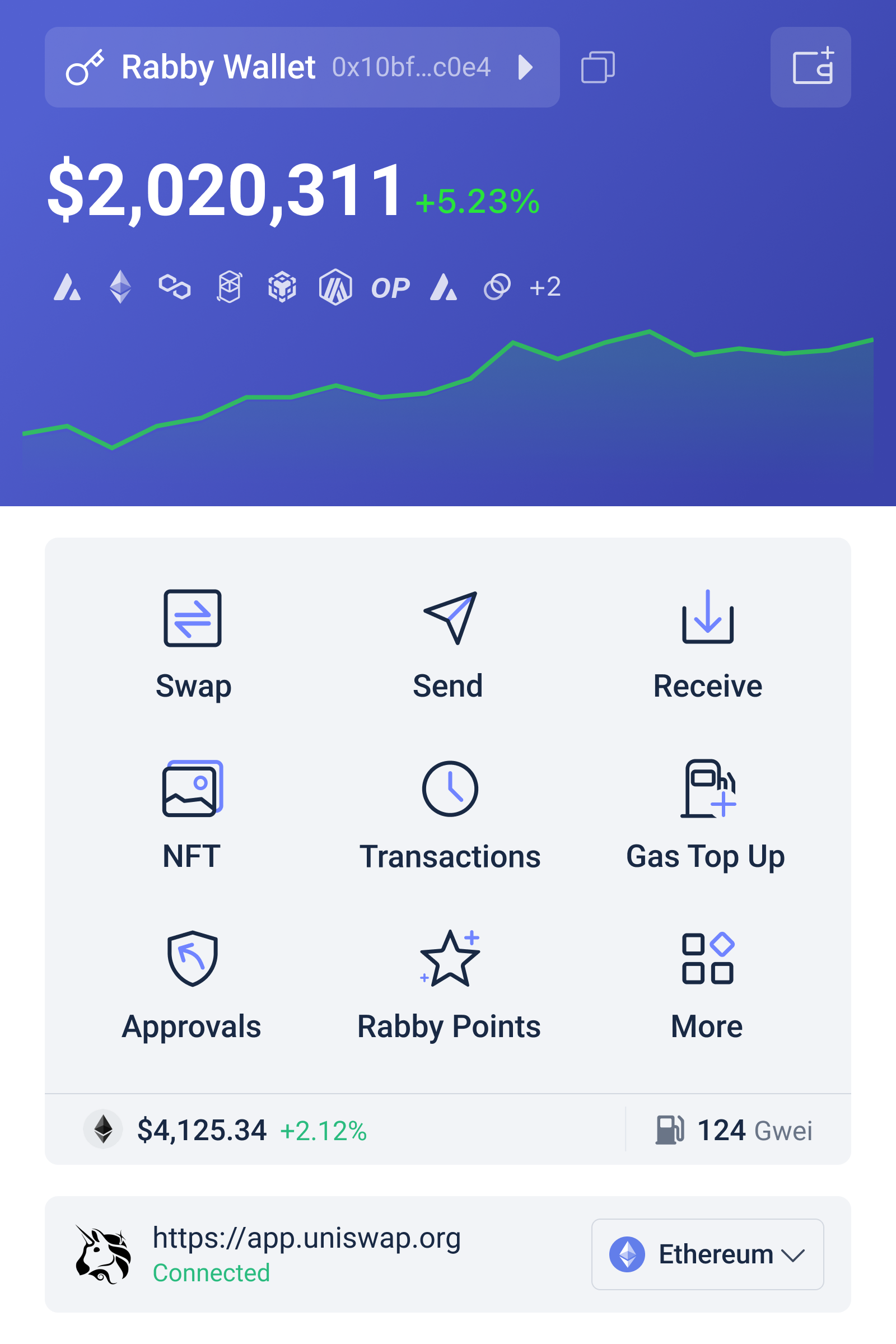
That is the practical value of using a tool such as rabby wallet when evaluating dApp interactions: the wallet can serve as an inspection layer before the user commits a signature, rather than acting only as a passive key holder. The important principle is not that a particular interface eliminates risk. It is that the interface should make the transaction’s economic and permission consequences easier to inspect at the point of decision.
Users should also treat warnings as prompts for investigation, not as proof that every unflagged transaction is safe. Detection systems may lack complete information about newly deployed contracts, unusual calldata, cross-chain behavior, or rapidly changing market state. False positives can make users ignore warnings, while false negatives are unavoidable in an adversarial environment. Good security design therefore combines automated analysis with a clear escalation path: pause, inspect the destination, reduce the amount, test with a small value, or avoid the interaction.
For larger trades, operational discipline often matters more than marginal interface improvements. Compare the quoted price across venues, examine pool depth, reduce unnecessary slippage, consider splitting the order, and avoid broadcasting highly predictable trades when a suitable protected route exists. For bridges and complex vaults, review the recipient, chain, token representation, withdrawal conditions, and any permissions that remain after the initial action. A simulation is most useful when the user knows which questions to ask of it.
What MEV Protection Cannot Solve
MEV protection has an important limitation: it addresses transaction ordering and visibility, not the full protocol risk stack. A protected transaction can still interact with an exploitable contract. It can still be routed through a manipulated oracle, suffer from an extreme price move, or create a dangerous approval. Private submission can also introduce dependence on a specific relay or builder path. If that path delays, censors, fails, or offers different inclusion guarantees, the user faces a new operational trade-off.
There is also a market-structure question. Some forms of private order flow may reduce sandwiching for individual users while making transaction flow less transparent to the wider market. That does not automatically make private routing harmful or beneficial; the result depends on implementation, competition among intermediaries, and how much control users retain. The broader lesson is that protection mechanisms redistribute information and incentives. They do not remove them.
Cross-chain dApps add another boundary condition. A wallet may simulate the source-chain transaction accurately while the final outcome depends on a bridge, message relayer, destination-chain contract, or asynchronous settlement process. A successful source transaction does not necessarily mean that the user has received the intended asset on the destination chain. Risk assessment must follow the entire message path, not stop at the first confirmed hash.
What to Watch Next
The direction of dApp security will likely depend on whether wallets can make complex intent legible without reducing every decision to an oversimplified warning. Conditional transaction execution, clearer permission standards, better simulation of state changes, and more competitive protected-order routing could all reduce avoidable losses. These improvements would matter most if they remain transparent about assumptions and give users meaningful control.
A useful signal to watch is whether wallet interfaces move from describing isolated calls to explaining complete outcomes: assets spent, assets received, permissions created, counterparties involved, and risks that remain after settlement. If that shift occurs, the wallet becomes a risk-management instrument rather than merely a signing device. If interfaces instead rely on opaque scores, users may gain convenience without gaining understanding.
The durable takeaway is simple but not simplistic: transaction safety is a layered judgment. Simulation helps test what a call appears likely to do. MEV-aware routing can reduce certain ordering harms. Permission controls limit the consequences of future compromise. Human review remains necessary because none of these layers observes the entire future state of an adversarial market. The strongest DeFi workflow is therefore not “sign when the warning disappears,” but “sign only after the transaction’s authority, economics, execution path, and remaining uncertainty make sense together.”
Frequently Asked Questions
Does transaction simulation prevent MEV attacks?
No. Simulation can reveal the expected result of a transaction under a particular state and set of assumptions, including projected token movements and some slippage concerns. It cannot guarantee the future ordering of transactions or prevent a third party from reacting to a pending trade. MEV protection and simulation address different parts of the risk: one focuses on execution visibility and ordering, while the other focuses on intent-to-effect verification.
Is a low-risk or trusted dApp always safe to use?
No. A trusted dApp can still be used with excessive slippage, an overly broad approval, the wrong network, or an incorrect recipient. Protocol reputation can reduce some uncertainty around code and operations, but it does not eliminate market, interface, key-management, or transaction-construction risk. Review the specific call and the amount being exposed.
Should DeFi users always use private transaction submission?
Not necessarily. Private submission may reduce exposure to some public-mempool strategies, particularly for trades vulnerable to sandwiching, but it can involve different reliability, availability, and transparency trade-offs. The appropriate choice depends on the chain, the transaction type, the trade size, and the route’s actual guarantees. It should be treated as one control within a broader risk process.